WHERE THIS TEST ENDED
The projector responds, but the prototype is inconsistent. Reliable power and input selection still need work.
- Fletcher on the Pi
- Controller over Wi-Fi
- Infrared command
- Projector
From the Flipper to a separate controller
In the previous update, I used the Flipper Zero to learn the projector remote. Here I export those codes to my computer, turn them into a readable reference, and use them in a program for a Seeed controller. The Flipper is the learning tool; the smaller board is the device intended to stay with the projector.
The build configuration identifies the board as a XIAO ESP32-C6 running ESPHome. Each named control sends one of the captured NEC infrared commands. That gives the software individual buttons for power, directions, and OK.
Putting the prototype together
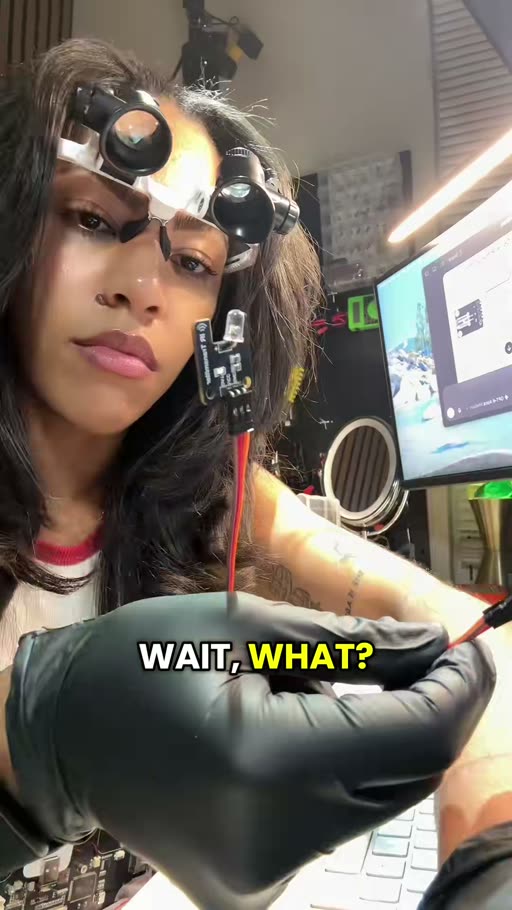
I connect the transmitter and controller with jumper leads, checking the ground, power, and signal connections against the board diagrams. The connector mismatch in the video is a practical part of this: the plugs have to mate with the headers already on the boards.
This is a temporary connection for testing. The exact module and pin labels matter; the wiring shown is a record of this prototype, not a universal pinout for every infrared module.
What the projector actually did
At 2:22 I start pressing the software controls. The transmitter flashes, but the projector does not reliably respond. Moving close to the projector and sending repeated presses eventually produces a response, and I work through its menus.
The desk notes agree with that limit: power worked best directly beneath the projector, often with presses in groups of three. The scripted startup did not reliably reach the HDMI input. A flash on the transmitter confirms activity at the sender; the projector changing state is the useful test.
How this connects to Fletcher
The next software path is a request from Fletcher on the Pi to the ESPHome board, followed by an infrared command to the projector. The prototype code also checks whether the projector is already on, because its power command is a toggle: sending it twice can undo the first press.
That path was being developed alongside this test. This episode demonstrates the transmitter and manual controls; it does not establish a finished voice-to-dashboard startup. Placement, signal strength, and a dependable route to HDMI remain the next work.
About this breakdown
Matched to this original TikTok, including its spoken captions. Technical context also comes from the corresponding Fletcher build notes. The result above describes this episode; later work is identified separately.
Breakdown checked September 6, 2026.